

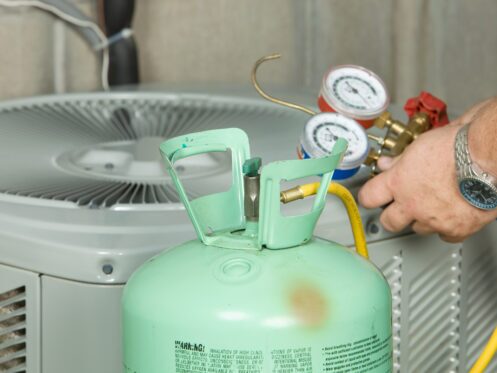
Your HVAC system is one of the biggest investments in your home, and it keeps your family comfortable all year round. Beginning in 2026, there are important changes to the refrigerants used in new systems homeowners should understand. Knowing what’s changing can help you make informed decisions about maintenance, repair, or future replacement.
What Are Refrigerants?
Refrigerants are chemicals used inside central air conditioning systems and heat pumps. Their job is to absorb heat and transfer it to another location. During the summer, they absorb heat from inside your home and release it outdoors. In the winter, heat pumps can absorb heat from outside and move it indoors.
Why Are There Refrigerant Regulations?
Common refrigerants have included R-22 and R-410A, along with newer options like R-32 and R-454B. Residential air conditioning systems and heat pumps are regulated by the Environmental Protection Agency (EPA).
Over time, certain refrigerants have been found to contribute to environmental issues when released into the atmosphere, such as ozone depletion (in older refrigerants like R-22) and global warming. Because of this, regulations have been introduced to phase out higher-impact refrigerants. The Montreal Protocol helped phase out R-22 due to its ozone-depleting properties.
Today, the focus is on refrigerants with lower global warming potential (GWP), which are considered more environmentally responsible.
Understanding the Transition Away from R-410A
After R-22 was phased out, R-410A became the standard refrigerant in residential HVAC systems. While it does not harm the ozone layer, it has a higher global warming potential (GWP) than newer alternatives.
Because of this, the Environmental Protection Agency (EPA) is guiding the industry toward refrigerants with lower environmental impact. Beginning in 2025, newly manufactured residential HVAC systems are being designed to use next-generation refrigerants such as R-32 and R-454B.
You may hear 2026 mentioned in this transition. In general, this reflects the period when older R-410A equipment is phased out of new installations as the industry shifts to updated systems.
It’s important to understand that this is a gradual transition taking place over several years—not an overnight change.
What’s Replacing R-410A Refrigerant?
Newer refrigerants include R-32 and R-454B. These options have a lower global warming potential compared to older refrigerants. They are part of the A2L classification, which means they are mildly flammable under specific conditions and require updated safety standards during installation and service.
Are Homeowners Mandated to Upgrade?
Homeowners are not required to replace an existing system that uses R-410A. If your system was installed before 2026, you can continue using it as long as it operates properly. There is no mandate requiring immediate replacement.
For most homeowners, this transition does not require immediate action. If your current system is operating properly, you can continue using it. However, if your system is older or nearing replacement, it may be worth exploring newer options designed with updated refrigerants and improved efficiency.
Over time, as production of older refrigerants decreases, repair costs involving refrigerant may increase, especially if a system develops a leak.
Can You Convert Your Existing System?
In most cases, existing systems cannot be converted to use newer refrigerants. Different refrigerants operate under different pressures and require system components designed specifically for them. This means a full system replacement is typically needed to switch refrigerant types.
A Note About Newer Refrigerants
New refrigerants like R-32 and R-454B fall into what’s known as the A2L category, meaning they are mildly flammable under specific conditions.
While that may sound concerning, these systems are designed with updated safety standards. When installed and serviced by trained professionals, they are safe for residential use.
These refrigerants require:
- Technicians who are properly certified
- Compliance with updated safety standards
- Following manufacturer installation guidelines
Should You Get an AC Replacement?
When learning about refrigerant changes, it’s natural to wonder if replacement is necessary. Start by checking your system’s nameplate to identify which refrigerant it uses.
If your system uses R-22, replacement is typically recommended since it is no longer produced. Newer systems are generally more energy efficient, which may help reduce long-term energy costs. If your system uses R-410A, you can continue to use it as long as it functions properly.
Reliable HVAC Replacement Service
GVEC Air Conditioning & Heating offers reliable HVAC replacement service for New Braunfels, TX and the surrounding communities. We can also help with your HVAC installation, repair, and AC maintenance needs. Simply call our office today to schedule your next service consultation with one of our experienced team members.


